
Professional Trainings for Mental Health Professionals in Evansville, Indiana
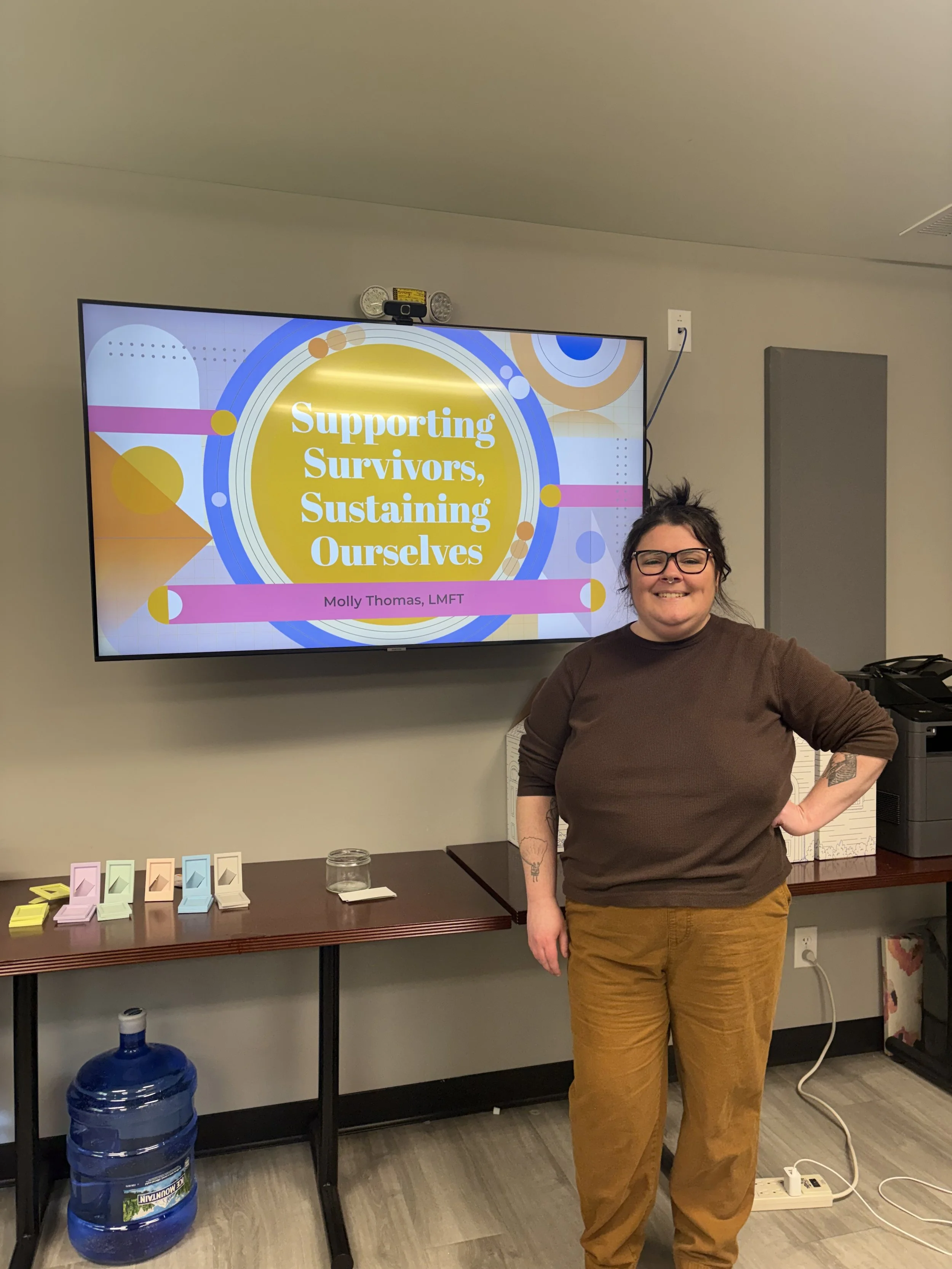
Professional trainings that connect the research to the therapy room.
Let's be honest. Obtaining our continuing education credits can oftentimes feel like something you have to get through. I’ve been there myself… chugging coffee and mindlessly taking notes (or doodling) to stay awake. These presentations often feel like one more annoying thing to check off your list.
I believe professional training can be different.
My trainings are designed for mental health professionals who want more than a list of facts and a certificate at the end. Each training combines research and foundational knowledge with practical clinical application, reflection, discussion, and real-world considerations for working with clients.
I want you to leave with something you can actually use. Something you can think about differently. Something you can bring into your next session.
Trainings are typically two hours and are available virtually or in person. Continuing education credit is available for eligible professionals and trainings, or organizations can choose a non-CE professional development format as well.
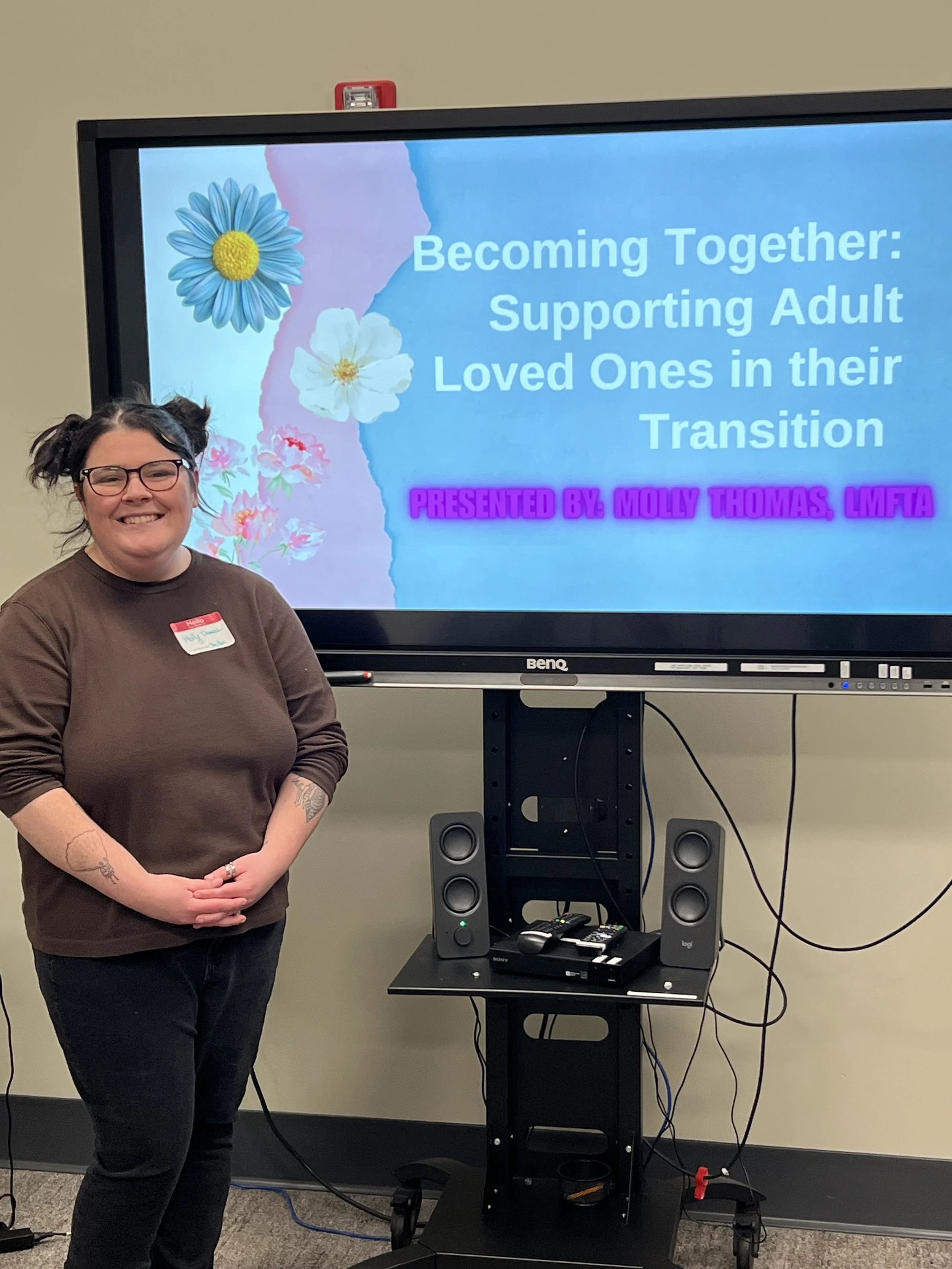
Continuing Education or Professional Development
Not every organization needs CE credit.
Sometimes you're looking for a meaningful professional development experience for your team without needing everyone to complete CE requirements.
That's an option, too.
Trainings can be provided with or without continuing education credit, depending on your organization's needs and the eligibility of the participants.
For organizations seeking CE credit, I'll provide the documentation and administrative components required for the approved training.
I'd be happy to help you determine which format makes the most sense for your team.
Current Trainings Offered

Introduction to Queer-Affirming Therapy
Designed for clinicians who want to provide more affirming care to queer and trans clients but aren't always sure where to begin.
We'll explore foundational terminology, the mental health field's history of discrimination against queer and trans communities, self-of-the-therapist considerations, and practical affirmative interventions that can be incorporated into clinical work.
This training is designed to move beyond simply learning the "right words." We'll talk about what affirming therapy actually looks like in the therapy room and how clinicians can continue examining their own assumptions, knowledge, and areas for growth.
Relational Safety After Sexual Trauma: Clinical Implications for Couples Therapists
Sexual trauma doesn't happen in a vacuum.
It can affect intimacy, trust, communication, attachment, and feelings of safety within relationships, creating unique considerations for couples therapists.
This training is designed for clinicians working with couples where sexual trauma is impacting the relationship. Participants will explore how trauma may shape relational dynamics and how those dynamics can emerge within the therapy room.
We'll discuss trauma-informed approaches to fostering emotional and relational safety, navigating conversations about intimacy, and supporting both partners as they work toward greater connection.
Introduction to Trauma-Informed Therapy
Trauma shows up in the therapy room in many different ways, and clinicians don't always receive enough practical education about what to do with what they are seeing.
This introductory training provides an overview of trauma, including the impact of trauma on the brain and nervous system, different types of trauma, and the effects of childhood trauma on adult development and relationships.
We'll also explore trauma-informed care and practical interventions clinicians can begin incorporating into their work with trauma survivors.
Supporting Others, Sustaining Ourselves
Helping professionals spend their days supporting people through some of life's most difficult experiences. That work matters. It can also take a toll.
This training explores the differences between burnout, compassion fatigue, and vicarious trauma, while examining the personal, organizational, and systemic factors that contribute to occupational stress and emotional exhaustion.
We'll also talk about something that often gets overlooked: who we are outside of our work. Participants will have the opportunity to consider the relationships, interests, values, activities, and sources of joy that make up a meaningful life beyond their professional identity.
Working with Shame After Sexual Trauma: An Affirming Framework for Queer Clients
Shame is often one of the most enduring effects of sexual trauma.
For queer clients, experiences of minority stress, stigma, discrimination, and identity-related shame can add additional layers to an already complicated healing process.
This training explores the intersection of sexual trauma, shame, and queer identity through an affirming and trauma-informed lens.
Participants will explore how shame develops and is maintained, examine the unique experiences of queer survivors, and learn practical strategies for supporting clients as they work toward greater self-compassion, authenticity, and resilience.
Custom trainings are also available for organizations looking for content tailored to their team's needs. Customization, length, format, and CE availability can be discussed during the consultation process.
Bring A Training To Your Team Today!
I currently offer five established trainings, but I'm also open to creating something new!
If your organization or group practice has a specific population, clinical issue, or professional development need you'd like to address, let’s talk! You’re more than welcome to send me an email at mollyt@commongroundtherapyllc.com.
Maybe your team wants training on working with a particular population.
Maybe you're seeing a clinical issue repeatedly and want your staff to have a shared framework.
Maybe you have a topic in mind but haven't found a training that feels quite right.
We can build something together!
Custom trainings are available for organizations looking for content tailored to their team's needs. Customization, length, format, price, and CE availability can be discussed during the consultation process.
Training Formats
-
Available for organizations in the Evansville, Indiana area and surrounding communities. At this time, I generally travel within approximately one hour of Evansville for in-person trainings.
-
Common Ground Therapy also provides virtual trainings for mental health professionals. CE credits are also available for this format!
-
Most trainings are approximately two hours, although alternative formats can be discussed for organizations with different scheduling needs.

FAQs
What do trainings with Common Ground Therapy cost?Training costs vary depending on the format and needs of your organization. Factors such as CE credit requirements, number of participants, travel, and whether you’re requesting a custom training can all affect the cost. Two-hour professional development trainings start at $500, while custom trainings start at $750. I’m happy to provide a personalized quote based on your organization’s needs and goals.
Who can receive CE credits through Common Ground Therapy?I am approved by the Indiana Behavioral Health and Human Services Licensing Board to give out CE credits. This includes:
Licensed Social Workers (LSWs), Licensed Clinical Social Workers (LCSWs)
Licensed Marriage and Family Therapists (LMFTs), Licensed Marriage and Family Therapist Associates (LMFT-As)
Licensed Mental Health Counselors (LMHCs)
Licensed Addiction Counselors (LACs), Licensed Clinical Addiction Counselors (LCACs)
Can my team receive CE credits if the training is virtual?Absolutely! As an approved CE provider, I will take care of all of the background work on providing certificates and maintaining compliant record keeping. Whether you are hosting the training in-person or virtually, you and your team can receive continuing education credits and certificates for your records!
Still have questions? No problem! Feel free to send me an email and we can figure it out together!